Case
Case

In the Middle East, desalination plants are critical infrastructure for ensuring the continuous operation of urban drinking water, industrial water, and energy projects. Whether it's RO membrane systems, MSF multi-stage flash distillation, or MED multi-effect distillation systems, valves are core components in desalination systems that must withstand high salt corrosion, high pressure differentials, and continuous operation. Inappropriate valve selection can lead to leaks, corrosion failure, and even shutdowns and soaring maintenance costs.
This article will describe how to select the correct valve type, material, control method, and supplier standards, based on common requirements of desalination projects. It will also naturally include WEIZIDOM's experience in the field of desalination valves, providing directly applicable engineering references for Middle Eastern clients.
Seawater desalination projects typically include raw water intake, pretreatment, reverse osmosis, concentrate discharge, and freshwater transportation. Each stage has different requirements for valve performance:
Corrosion Resistance: Due to the high salt content of seawater, metal valves are easily corroded, requiring the selection of corrosion-resistant materials.
Pressure Resistance: Reverse osmosis systems and pump station pipelines often withstand high pressures, requiring valves to meet design pressure requirements.
Precise Flow Control: Freshwater production efficiency depends on the regulating performance of valves, especially control and regulating valves.
Abrasion Resistance: Suspended particles may be present in the pretreatment stage, necessitating wear-resistant materials or lining designs for valves.
WEIZIDOM offers a variety of dedicated desalination valves, including carbon steel/stainless steel gate valves, ball valves, butterfly valves, and high-performance control valves, meeting the operational needs of different stages.
✅ 1. Gate Valve
Applications: Main pipeline shut-off, pump outlet, concentrate discharge.
Advantages: Low flow resistance, low pressure loss when fully open.
Selection Points: It is recommended to choose corrosion-resistant stainless steel or rubber-lined gate valves to resist seawater corrosion.
WEIZIDOM Recommendation: High corrosion-resistant WCB and 304/316 stainless steel gate valves, reliable sealing, and low maintenance costs.
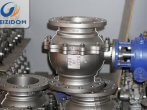
✅ 2. Ball Valve
Applications: Reverse osmosis systems, freshwater pipelines.
Advantages: Quick on/off, high sealing performance, precise flow control.
Selection Points: Full-bore design recommended for high flow rates; metal-sealed ball valves are suitable for high-pressure conditions.
WEIZIDOM Recommendation: Three-piece carbon steel or stainless steel ball valves, supporting manual, electric, and pneumatic operation.
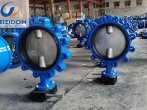
✅ 3. Butterfly Valve
Applications: Circulating water systems, freshwater storage pipelines.
Advantages: Lightweight structure, easy installation, suitable for large-diameter pipelines.
Selection Points: Soft seals are suitable for low-pressure water systems, hard seals are suitable for high-pressure or high-temperature conditions.
WEIZIDOM Recommendation: Flanged/wafer butterfly valves, various sealing materials available to suit different pipe diameter requirements.
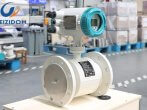
✅ 4. Control Valve
Applications: Freshwater permeate control, brine concentrate flow regulation.
Advantages: Enables automated control, ensuring stable system operation.
Selection Points: Corrosion-resistant valve body material, stable regulating performance, optional electric or pneumatic actuators.
WEIZIDOM Recommendation: High-precision control valves, suitable for the high-temperature, high-salinity environment of Middle Eastern seawater desalination.
The choice of valve material for seawater desalination systems directly affects lifespan and operating costs. We recommend the following principles for Middle Eastern customers:
Carbon steel: Economical and practical, suitable for low-salinity circulating water pipelines, requires anti-corrosion coating.
Stainless steel (304/316): Highly corrosion-resistant, suitable for seawater and reverse osmosis systems.
High-alloy steel/rubber-lined: Suitable for high-pressure, impurity-containing water or highly corrosive media, improves wear resistance.
WEIZIDOM offers Middle Eastern customers a variety of material options and provides professional selection solutions based on operating conditions.
Valve Installation: Ensure the valve and pipeline flow direction are consistent, flange connections are tight, and leakage is avoided.
Regular Inspection: Focus on inspecting the wear of seals, valve discs, and valve balls.
Corrosion Prevention: Clean seawater pipelines regularly and apply protective coatings when necessary.
Automated Control: Control valves and ball valves can be equipped with remote actuators for unattended operation.
Proper installation and maintenance can extend valve life, reduce downtime risks, and lower maintenance costs.
WEIZIDOM has many years of experience in the seawater desalination valve field, providing high-performance, corrosion-resistant valve solutions for the Middle East market:
1. Diverse Product Range: One-stop supply of gate valves, ball valves, butterfly valves, and control valves.
2. Reliable Materials: Carbon steel, stainless steel, alloy steel, and rubber-lined options to adapt to high-salt and high-temperature seawater environments.
3. Customized Solutions: Professional designs based on flow rate, pressure, diameter, and automation requirements.
4. Engineering Experience: Multiple involvement in large-scale seawater desalination plant projects in the Middle East, with on-time delivery and stable performance.
Choosing WEIZIDOM means choosing a safe, stable, and economical seawater desalination valve solution.
Middle East seawater desalination projects place high demands on valve performance; corrosion resistance, pressure resistance, wear resistance, and high-precision control are crucial. Scientific valve selection and the choice of reliable suppliers are essential for project success. With its professional products and extensive engineering experience, WEIZIDOM provides Middle Eastern clients with trustworthy valve solutions, making desalination plants more efficient, safer, and more economical.
More: Seawater desalination valves, Middle East seawater desalination, WEIZIDOM valves, corrosion-resistant gate valves, pressure-resistant ball valves, control valves, butterfly valve selection, seawater desalination system valves