Case
Case
In water treatment systems, valves play a crucial role in controlling flow, regulating pressure, and ensuring stable system operation. However, due to the complex operating conditions in water treatment environments, valves often face numerous problems. This article will discuss several common problems with water treatment valves, their causes, and effective solutions to help you extend valve lifespan, reduce failure rates, and ensure long-term stable system operation through proper selection and maintenance.
Water treatment valves are an indispensable component of water treatment systems. Common valve types include:
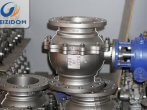
☀️ Ball valves: Primarily used for rapid opening and closing control, offering good sealing performance, suitable for applications requiring frequent switching.
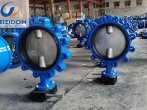
☀️ Butterfly valves: Suitable for high flow rates and low pressure conditions, providing rapid opening and closing, widely used in large-diameter pipelines.
☀️ Gate valves: Suitable for fully open or closed conditions, offering low flow resistance.
☀️ Control valves: Used for precise flow and pressure regulation, ensuring the stability of the treatment process.
Each type of valve plays a different role in different water treatment scenarios. Selecting the appropriate valve is key to ensuring the efficiency and stability of the water treatment system.
📌 1. Valve Leakage
Common Symptoms:
Media leakage persists even after the valve is closed, especially at flange connections or valve stem.
Main Causes:
Aging or wear of the sealing ring.
Corrosion of the valve body and sealing surfaces.
Improper installation or uneven bolt tension.
📌 2. Difficulty Opening and Closing
Common Symptoms:
Manual operation is laborious; electric or pneumatic valves operate poorly.
Main Causes:
Lack of lubrication in the valve stem or bearings.
Impurities in the medium causing blockage of the valve plate.
Inadequate matching between the actuator and the valve, resulting in insufficient torque.
📌 3. Actuator Failure
Common Symptoms:
Electric or pneumatic valves cannot be fully opened or closed.
Control signals are normal, but the valve does not move.
Main Causes:
Weared actuator gears.
Power or air supply problems.
Insufficient torque selection.
📌 4. Valve Body or Butterfly Plate Corrosion and Wear
Common Manifestations:
Rust appears on the valve body surface, significantly shortening its service life.
Main Causes:
Material incompatibility with the medium, especially highly corrosive media.
Wear caused by long-term high-frequency opening and closing.
✅ 1. Solving Sealing Problems
Solutions:
Replace the sealing material with one suitable for the operating conditions, such as EPDM, NBR, PTFE, or metal seals.
Check the fit between the butterfly plate and the valve seat to ensure the sealing surface is undamaged.
Correct the installation and tighten the flange bolts evenly to ensure sealing performance.
✅ 2. Improving Operational Issues
Solutions:
Regularly lubricate the valve stem and bearings to reduce friction.
Clean impurities from the pipeline; install a filter if necessary.
Ensure the actuator torque is appropriate for the valve to avoid operational difficulties due to insufficient torque.
✅ 3. Actuator Maintenance
Solutions:
Regularly check the operating status of the electric/pneumatic actuator to ensure a stable power or air supply. For applications with frequent opening and closing, select actuators with a long lifespan to reduce the failure rate.
✅ 4. Prevention of Corrosion and Wear
Solutions:
Select suitable valve materials, especially for highly corrosive environments; fluoropolymer-lined and stainless steel valves are ideal choices.
Regularly inspect the valve body and disc, and replace vulnerable parts promptly to avoid system failures caused by corrosion.
Correct valve selection is crucial for ensuring long-term stable system operation. The following factors should be considered during selection:
📌 Media Type: Different water qualities (e.g., wastewater, clean water, acidic/alkaline water) require different valve materials and structures.
📌 Operating Pressure and Temperature: The valve material and structure must meet the pressure and temperature requirements of the actual operating conditions.
📌Opening/Closing Frequency and Control Method: For high-frequency opening and closing applications, select valves with greater durability; electric or pneumatic control valves require precise matching.
📌 Valve Type Selection: Choose ball valves, butterfly valves, gate valves, or control valves according to the operating conditions to ensure they meet flow control and sealing requirements.
WEIZIDOM offers a range of water treatment-specific valves, providing customized selection solutions for different media and operating conditions, ensuring long-term stable operation in harsh environments.
The selection of water treatment valves is crucial for industrial wastewater, chemical wastewater, and other water treatment applications. Proper selection and scientific maintenance can significantly improve the reliability of water treatment systems and reduce downtime risks. With years of engineering experience and professional technical support, WEIZIDOM provides high-performance water treatment valve solutions to ensure your system operates efficiently, stably, and for extended periods.