Case
Case
In modern building air conditioning, industrial plants, central air conditioning systems, and district heating and cooling water circulation systems, HVAC valves play a crucial regulatory and control role. Whether it's ensuring system stability, improving energy efficiency, or reducing operating costs, choosing the right HVAC valves can significantly improve system performance.
However, due to the wide variety of valves, complex specifications, and diverse applications, many users often have questions before purchasing:
"Which type of valve is suitable for my HVAC system?"
"How can I avoid buying expensive, incorrect, or short-lived valves?"
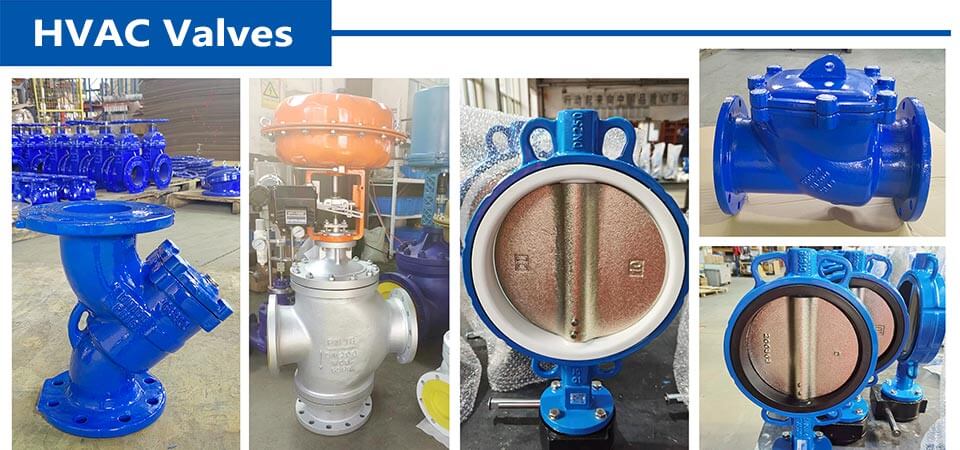
To help you choose the right valve the first time, this article will delve into how to purchase the right HVAC valves from multiple dimensions, including operating conditions, valve type, material, brand, and supplier.
Before purchasing HVAC valves, you must first understand your system parameters. Operating conditions determine the valve model, material, and control method; otherwise, even if the valve is successfully installed, it may be incompatible with the system, leading to problems such as leaks, unstable regulation, and noise.
The following five parameters are the most critical:
✔ 1. Medium Type
Chilled water, hot water, cooling water, steam, water containing impurities, etc. Different media require different valve materials and sealing methods.
✔ 2. Temperature and Pressure Range
High-temperature hot water requires a heat-resistant structure, while chilled water requires protection against condensation corrosion.
✔ 3. Flow Rate and Velocity
Directly affects the selection of valve size and the calculation of the Cv value (flow coefficient).
✔ 4. Control Method
Manual, pneumatic, or electric? Does the Building Automation System (BAS) require signal control?
✔ 5. Pipe Size and Installation Space
Butterfly valves are suitable for large diameters; ball valves are suitable for small diameters and frequent opening and closing; when space is limited, prioritize compact structures.
By clarifying these conditions, valve selection will be more accurate, avoiding rework or repeated purchases.
HVAC systems generally use the following common valve types, each with different advantages:
1. Ball Valve – Quick opening and closing, reliable sealing
Applications: Hot and cold water, small and medium-sized equipment, pipe isolation
Advantages: Durable, low torque, full bore design with low flow resistance
Scenarios: Machine rooms, fan coil units, heating pipelines
2. Butterfly Valve – Suitable for large-diameter HVAC systems
Applications: Chilled water, cooling water circulation systems
Advantages: Lightweight, cost-effective, suitable for DN200–DN1200
Scenarios: Central air conditioning, cooling towers, energy stations
3. Control Valve (Two-way/Three-way) – Precise flow control
Applications: Temperature control, valve and heat exchanger matching
Advantages: High adjustment accuracy, can be equipped with electric actuators
Scenarios: Air handling units, fresh air units, heat exchange systems
4. Balancing Valve – Improves system flow distribution accuracy
Applications: Balancing flow in hot and cold water systems
Advantages: Reduces energy consumption, avoids uneven heating and cooling in some areas
Scenarios: Hotels, commercial buildings, large shopping malls
5. Differential Pressure Bypass Valve – Ensures stable system operation
Applications: Variable frequency pump systems
Advantages: Avoids excessive differential pressure, reduces noise and wear
Scenarios: Energy-saving renovation projects, constant flow systems
Understanding these classifications will make your purchasing choices more informed.
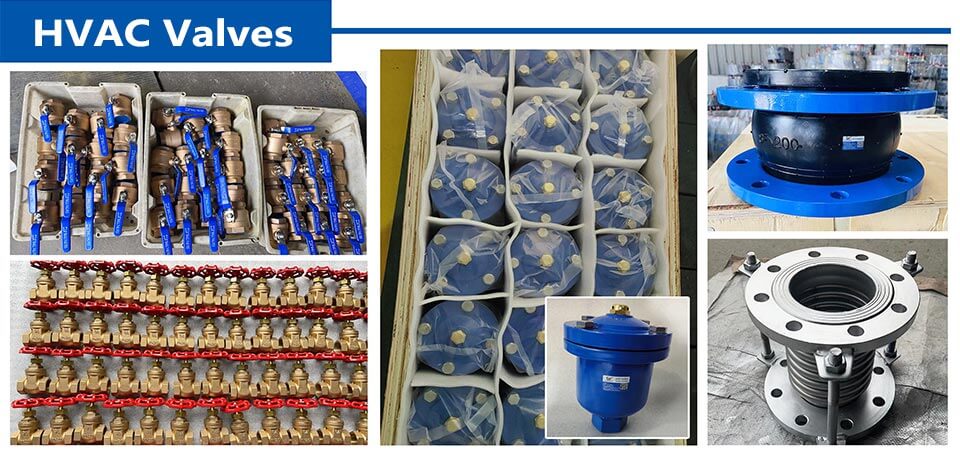
To ensure the long-term stable operation of your HVAC system, you also need to pay attention to the following key points:
✔ Valve Body Material
Cast iron: High cost-effectiveness, suitable for general HVAC systems
Ductile iron: Higher strength, mostly used in large pipelines
Stainless steel: Suitable for corrosive environments or high hygiene requirements
✔ Sealing Material
EPDM, NBR, PTFE, choose according to the medium.
✔ Actuator Quality
Electric valves: Consider torque, response speed, and lifespan
Pneumatic valves: Consider air source stability
Signal type (0–10V, 4–20mA, Modbus) must be compatible with the control system
High-quality valves not only have a longer lifespan but also significantly improve energy efficiency and reduce maintenance costs.
The following are common mistakes many users make:
❌ Focusing only on price and ignoring operating conditions
❌ Using non-freeze-resistant materials in low-temperature systems
❌ Ignoring Cv value calculations for control valves, leading to unstable regulation
❌ Using variable-frequency pumps without a differential pressure valve
❌ Choosing ball valves for large-diameter pipes, resulting in significantly increased costs
The correct approach is:
👉 First determine system requirements → Then select the valve type → Then confirm the material and control method.
High-quality HVAC valves come not only from the product itself but also from the supplier's technical capabilities, selection guidance, and after-sales support.
When choosing a supplier, please note:
✔ Do they provide professional selection solutions?
Suppliers who don't understand operating conditions will only make you bear the risk of use.
✔ Do they provide samples, technical drawings, and CAD/BIM models?
These are commonly used in engineering projects; their absence makes approval impossible.
✔ Do they have comprehensive after-sales service and warranty?
Installation guidance and commissioning support are crucial.
✔ Do they have relevant HVAC project experience?
For example, building air conditioning, energy stations, factory cooling systems, etc.
If you need more professional technical guidance and project-level services,
WEIZIDOM can provide the following for HVAC engineering:
Complete valve selection
Custom valve design and matching actuators
Solution design and operating condition calculations
International shipping, certificates, and technical documentation
Helping you complete your purchase in one go, avoiding repeated rework.
1. What are some commonly used valves in HVAC systems?
Ball valves, butterfly valves, control valves, balancing valves, differential pressure bypass valves, electric two-way/three-way valves, etc.
2. How to select valves for HVAC systems?
The model and material are determined based on the medium (chilled water/hot water), temperature and pressure, pipe diameter, flow requirements, and control method.
3. Which valve is more economical for large-diameter pipes?
Butterfly valves are preferred; they are lightweight, cost-effective, and particularly suitable for pipes with a diameter of DN200 and above.
4. Should a ball valve or a three-way valve be chosen for HVAC control valves?
It depends on the requirements:
Ball valve → On/off control
Two-way valve → Precise flow control
Three-way valve → Mixing/diverting control
5. What to do if there is noise in the chilled water system?
Check if a differential pressure bypass valve needs to be installed or if the balancing valve needs to be readjusted.