Case
Case

Ball valves are widely used in oil and gas, chemical, power, water treatment, and industrial pipeline systems due to their excellent sealing performance, rapid operation, and high reliability. Among them, floating ball valves and fixed ball valves are the two most common structural forms. However, many purchasing personnel and engineers are often unclear about the core differences between the two, leading to valve selection that does not match the actual operating conditions. WEIZIDOM, drawing on years of experience, helps you make more rational decisions in engineering projects from different perspectives.
✅ 1. Floating Ball Valve
In a floating ball valve, the ball has no fixed support shaft. Under the pressure of the medium, the ball moves slightly downstream towards the valve seat, thus achieving a seal.
Structural Features:
The ball "floats," relying on medium pressure for sealing.
Simple structure, few parts.
The valve seat typically bears the entire medium pressure.
✅ 2. Trunnion Ball Valve
In a trunnion ball valve, the ball is fixed by upper and lower valve shafts. The ball does not move with medium pressure; sealing is mainly achieved by a resilient valve seat.
Structural Features:
The ball is fixed by upper and lower shafts.
The valve seat experiences more even stress.
Typically equipped with pressure relief and fireproof structures.
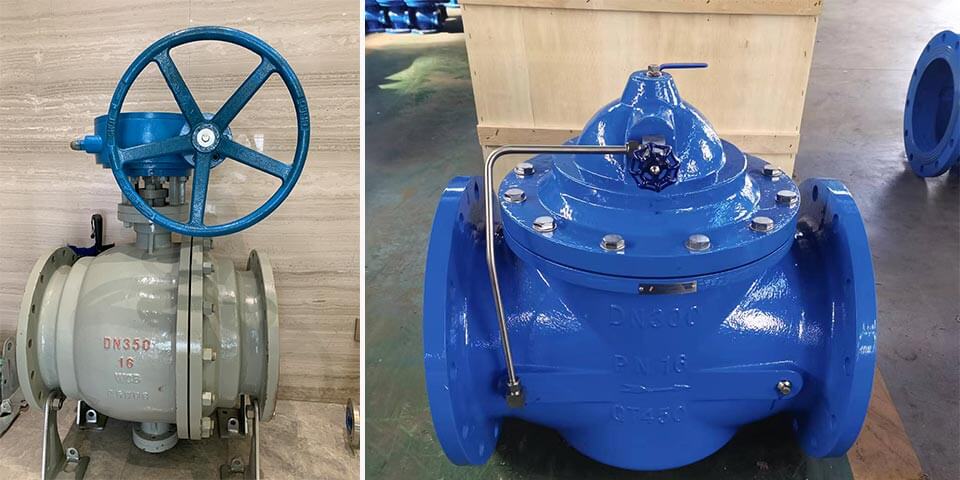
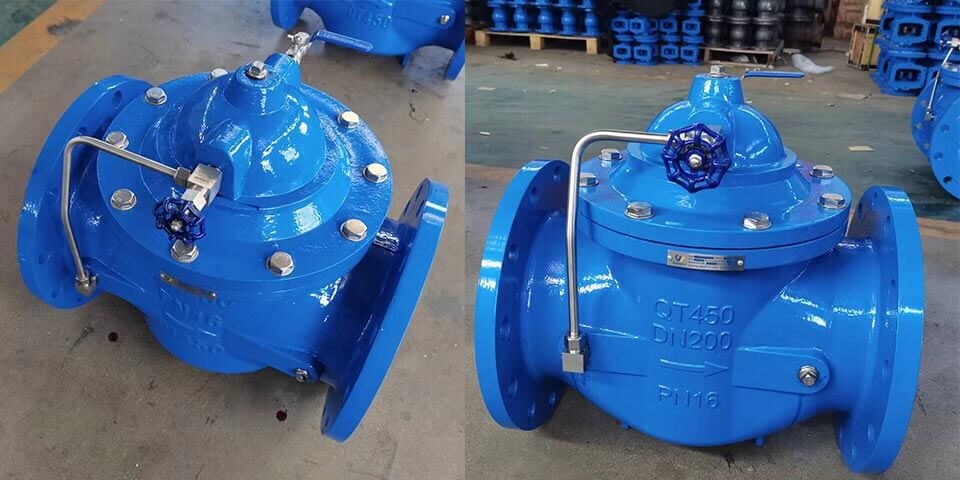
From an engineering application perspective, pressure and diameter are important criteria for distinguishing between the two types of ball valves.
Floating Ball Valve: More suitable for medium to low pressure, small to medium diameter pipelines, generally common in the DN15–DN200 range. As pressure and diameter increase, operating torque and valve seat wear will increase significantly.
Fixed Ball Valves
Designed for high-pressure, large-diameter applications, widely used in pipeline systems with DN200 and above, and pressure ratings of Class 300 and above, especially suitable for long-distance pipelines and oil and gas trunk pipelines.
👉 Floating Ball Valves
Sealing depends on medium pressure
High seat load under high-pressure conditions
Operating torque increases significantly with increasing pressure
👉 Fixed Ball Valves
Elastic seat seal, more even pressure distribution
Low and stable opening and closing torque
More suitable for frequent operation and automated control systems
From a long-term operating cost perspective, the two types of ball valves have their respective strengths:
Floating Ball Valves
Lower initial purchase cost
Simple maintenance
More suitable for non-critical pipelines and general industrial systems
Fixed Ball Valves
Higher initial investment
Longer service life
More suitable for continuous operation and critical systems with high safety requirements
In high-risk industries such as oil and gas and chemical industries, fixed ball valves often have a greater advantage in total life cycle cost.
| Industry Sectors | Recommended Ball Valve Types | Reasons for selection |
| Oil & Gas | Fixed Ball Valve | High pressure, large diameter, requiring fire resistance and high safety |
| Chemical Plants | Fixed Ball Valve / Floating Ball Valve | Depending on pressure rating and medium characteristics |
| Municipal Water Supply & Drainage | Floating Ball Valve | Low pressure, cost-sensitive |
| HVAC Systems | Fixed Ball Valve | Simple structure, easy maintenance |
| Long-Distance Pipelines | Fixed Ball Valve | High stability, reliable opening and closing |
In the actual procurement and design phase, it is recommended to follow the following selection logic:
1. First, consider the operating conditions: Media type, pressure, temperature, whether it is flammable or explosive
2. Then determine the diameter: Small diameter, prioritize floating ball valves; large diameter, prioritize fixed ball valves
3. Evaluate the operating method: Manual, electric, or pneumatic
4. Consider standard requirements: Is API 6D, API 607, fireproof certification, etc. required?
5. Choose a reliable supplier: Has engineering experience and a complete testing and certification system.
📌 Floating ball valves: Simple structure, low cost, suitable for medium and low pressure, small diameter, and general industrial applications.
📌 Fixed ball valves: High pressure resistance, stable operation, suitable for high pressure, large diameter, and critical oil, gas, and energy projects.
A correct understanding of the differences between the two, and selection based on specific operating conditions, is essential to achieving the best balance between safety, reliability, and economy.