Case
Case

In oil and gas, LNG storage and transportation, chemical plants, and high-pressure energy networks, valves not only perform opening and closing functions but are also core equipment ensuring the safe and stable operation of the system. Among various valve types, ball valves are often the preferred choice for high-pressure pipelines.
Why do engineers prefer ball valves in high-pressure environments? The reasons involve structural principles as well as safety levels and long-term operating costs. This article will systematically analyze the core logic of prioritizing ball valves in high-pressure pipelines from four dimensions: structural design, sealing performance, safety and reliability, and life-cycle cost.
In high-pressure systems, valves must simultaneously meet the following conditions:
Withstand high static pressure and impact pressure
Ensure zero or extremely low leakage levels
Resist temperature fluctuations and pressure pulsations
Controllable opening and closing torque for easy automation control
Stable long-term operation, reducing downtime risks
Once a valve seal fails, it may lead to rupture, leakage, or even safety accidents. Therefore, valve selection under high-pressure conditions is essentially a rigorous screening of structural strength and sealing reliability.
1️⃣ Ball-enclosed sealing structure: the greater the pressure, the tighter the seal.
Ball valves use a ball and seat to form an annular contact surface. When the medium pressure increases, the pressure pushes the seat to fit more tightly against the ball, creating a "pressure self-sealing" effect.
In contrast, butterfly valves have a smaller pressure-bearing area on the sealing surface, resulting in a more concentrated sealing load under high-pressure conditions; gate valves rely on a wedge-shaped structure for sealing, leading to greater opening and closing resistance under high pressure.
Therefore, from a structural sealing mechanism perspective, ball valves are more suitable for high-pressure systems.
2️⃣ Fixed ball structure enhances pressure-bearing capacity.
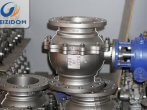
In high-pressure, large-diameter systems, fixed ball valves are typically used. The ball is supported by upper and lower bearings, distributing the medium pressure among the bearings and reducing the stress on the valve seat.
Advantages include:
Stronger pressure-bearing capacity
More stable opening and closing torque
Less wear on the sealing surface
This makes fixed ball valves the mainstream choice for high-pressure long-distance pipelines.
3️⃣ Full-bore design reduces flow resistance
High-pressure systems typically involve high flow rates and long-distance transport. Ball valves can achieve a full-bore design with virtually no pressure loss.
Lower flow resistance means reduced pumping energy consumption, reduced system pressure loss, and improved overall transport efficiency, which is especially important in long-distance natural gas pipelines.
📌 90° rapid opening and closing, suitable for emergency shut-off
High-pressure systems must have emergency shut-off capabilities. Ball valves only require a 90° rotation to open and close, providing a rapid response and facilitating electric or pneumatic actuator operation.
In the event of a sudden accident or abnormal pressure, ball valves can quickly cut off the flow of the medium, reducing risk.
📌 Fireproof, anti-static, and anti-blowout design
High-pressure ball valves typically conform to API standards and feature fireproof structural designs, anti-static devices, and stem blowout protection. These designs prevent sparks or stem detachment accidents in high-pressure gas environments, significantly improving system safety.
📌 Two-way Sealing Capability
Pressure backflow may occur in high-pressure systems. Ball valves can achieve a two-way sealing structure, adapting to complex flow direction changes.
In contrast, some gate valves or globe valves rely more on unidirectional sealing designs.
| Comparison Dimensions | Ball Valve | Gate Valve | Butterfly Valve | Globe Valve |
| Pressure Bearing Capacity | Strong | Strong | Medium | Strong |
| Sealing Performance | Excellent | Excellent | Medium | Good |
| Flow Resistance | Low | Low | Medium | High |
| Opening/Closing Speed | Fast | Slow | Fast | Slow |
| Automation Matching | High | Medium | High | Medium |
From an overall performance perspective, ball valves offer the most balanced comprehensive performance under high-pressure conditions.
Many projects only focus on the purchase price when selecting valves, but in high-pressure systems, long-term operating costs are more important.
⭐ Energy Cost: Full-bore ball valves have low flow resistance, reducing pressure loss and lowering energy consumption in the long run.
⭐ Maintenance Costs: The fixed ball structure offers stability and slower seal wear, reducing maintenance frequency.
⭐ Downtime Risk Costs: Downtime in high-pressure systems is extremely costly. Ball valves offer high sealing reliability, reducing the probability of sudden failures.
In summary, although the initial investment in high-pressure ball valves is relatively high, they are more economical in the long run.
High-pressure ball valves are widely used in:
Long-distance oil and gas pipelines
LNG storage and transportation systems
High-pressure chemical plants
High-pressure steam systems in power plants
Urban gas trunk networks
These fields have extremely high requirements for safety and sealing performance, therefore, ball valve structures are preferred.
The selection of ball valves for high-pressure pipelines is not accidental, but based on the following core reasons: high structural strength, strong pressure-bearing capacity of the fixed ball design; superior sealing performance, significant pressure self-reinforcing effect; rapid opening and closing, suitable for emergency shut-off; full-bore flow path, reducing pressure loss and energy consumption; mature safety standards, conforming to high-pressure industry specifications.
In other words, ball valves offer a balance of structural reliability, safety, and economy under high-pressure conditions, making them a preferred choice in engineering fields.