Case
Home / Case / Experience / How to Select the Right Valve, Fitting and Flow Meter for Your Chemical Plant?
Case

Chemical Industry Valve & Flow Control Selection Guide: 11 Essential Products for Corrosive Media, Acids & High-Purity Processing
The chemical industry is one of the most demanding environments for flow control equipment. Concentrated acids (H₂SO₄, HCl, HNO₃), caustic alkalis (NaOH), aggressive organic solvents, and high-temperature corrosive slurries rapidly degrade standard valves, fittings, and instruments. Packing leaks, seat erosion, metal corrosion, and permeation are daily battles.
Selecting the right product is not just about preventing leaks — it is about ensuring plant safety, preventing environmental releases, minimizing maintenance downtime, and protecting personnel from hazardous chemical exposure.
Fluorine-Lined Butterfly Valve
A butterfly valve with a fluoropolymer lining (PTFE, F46/FEP, or PFA) on all wetted parts — the body interior and the disc are fully encapsulated. The disc rotates 90° to open or close. Designed specifically for highly corrosive media including strong acids, alkalis, and oxidizing agents .
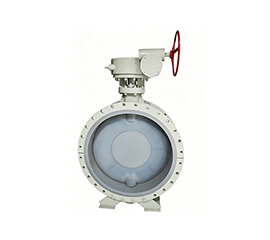
Superior chemical resistance – Fluorine lining resists sulfuric acid, hydrochloric acid, hydrofluoric acid, aqua regia, and strong alkalis .
Compact and lightweight – Takes less space than ball or gate valves of the same size.
Quick quarter-turn operation – Fast open/close for automated systems.
Bidirectional sealing – Achieves zero leakage with proper seat design .
Wide diameter range – Available DN50 to DN1200 (2" to 48").
Role in Chemical Industry
* Isolation and regulation of strong acid lines (HCl, H₂SO₄, HNO₃)
* Caustic soda (NaOH) transfer lines
* Organic solvent and oxidizing agent service
* Chemical reactor feed and discharge
Why Irreplaceable
Metal-seated butterfly valves corrode rapidly in acid service; rubber-lined valves degrade. The fluorine lining completely isolates the metal body from the media . For large-diameter corrosive lines where gate valves are too heavy and ball valves too expensive, the fluorine-lined butterfly valve is the standard choice.
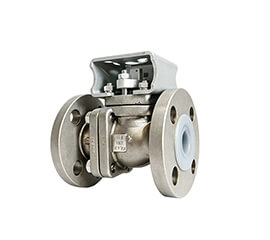
Fluorine-Lined Ball Valve
A ball valve with a fluoropolymer lining (PTFE, F46/FEP, or PFA) on the body, ball, and seats. Quarter-turn operation. The ball has a full or standard bore. Designed for aggressive chemical service where zero leakage and corrosion resistance are critical .
Unmatched chemical resistance – PTFE/F46 lining handles strong acids, alkalis, and solvents with high chemical stability .
Bubble-tight shut-off – PTFE seats provide zero leakage sealing .
Full port option – Same internal diameter as pipe, minimal pressure drop.
Stem and ball integrated – Eliminates potential leakage points between stem and ball .
Side-entry design – Allows inline maintenance without removing the valve body .
Role in Chemical Industry
* Acid and alkali isolation in critical process lines
* Solvent transfer systems
* Chemical reactor feed shut-off
* High-purity chemical handling
Why Irreplaceable
For smaller diameters (DN15 to DN200), the fluorine-lined ball valve offers tighter shut-off than butterfly valves and lower pressure drop than globe valves . In chemical service where even minor leakage cannot be tolerated, the PTFE seat design ensures bubble-tight sealing that no metal-seated valve can match.
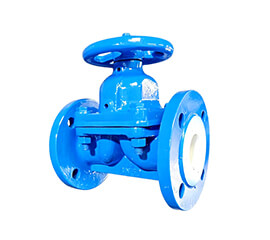
Fluorine-Lined Diaphragm Valve
A diaphragm valve with full fluoropolymer lining (PTFE, F46/FEP, or PFA) on the body and diaphragm. The flexible diaphragm is the only wetted component — it isolates the operating mechanism from the media completely. Available in weir-type and straight-through designs .
Zero stem leakage – No packing glands; the diaphragm fully isolates the bonnet from the process media .
Superior chemical resistance – Fluorine lining withstands strong acids, alkalis, and solvents .
Pocket-free flow path – No cavities or dead legs — prevents media entrapment and contamination .
Excellent for slurries and crystallizing media – Diaphragm conforms around particles for positive shut-off .
CIP/SIP capable – Suitable for high-purity and pharmaceutical chemical applications .
Role in Chemical Industry
* Isolation and dosing of strong acids and alkalis
* High-purity chemical processing
* Corrosive slurry and crystallizing media lines
* Chemical feed systems requiring zero fugitive emissions
Why Irreplaceable
Gate, ball, and globe valves all have packing glands that can leak and cavities that trap corrosive media. The diaphragm valve eliminates both issues — the diaphragm is the only wetted component, and the smooth flow path prevents media accumulation . For hazardous chemical service where fugitive emissions cannot be tolerated, the fluorine-lined diaphragm valve is the only reliable choice.
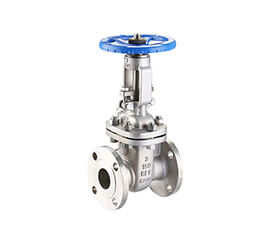
Stainless Steel Gate Valve
A gate valve with a stainless steel body (CF8/SS304 or CF3M/SS316L). The gate moves linearly up and down. Used primarily for isolation (on/off) in chemical piping. No lining — relies on the stainless steel alloy itself for corrosion resistance.
Corrosion resistance – SS316L resists acidic and chloride attack in moderate service.
Low pressure drop when fully open – Gate fully retracts for unobstructed flow.
Bi-directional sealing – Seals equally well in both flow directions.
High temperature capability – Suitable for elevated temperature chemical processes (unlike lined valves).
Role in Chemical Industry
* Isolation of non-severe chemical lines (mild acids, alkalis, water)
* High-temperature chemical service (where fluorine linings cannot be used)
* Steam and hot process water isolation
* Utility lines in chemical plants
Why Irreplaceable
For high-temperature chemical service above 180°C, fluorine-lined valves cannot be used — the lining material softens or degrades. Stainless steel gate valves provide full metal strength and corrosion resistance where polymer linings are not feasible. They also offer the lowest pressure drop for large-diameter isolation.
Stainless Steel Ball Valve
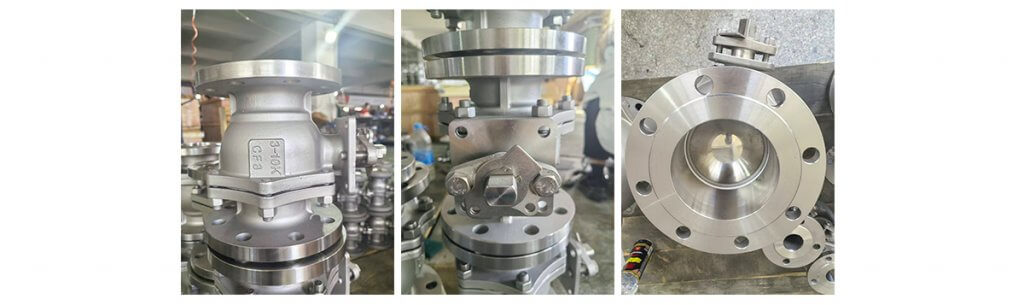
A ball valve with a stainless steel body (SS304, SS316, CF8, CF8M) and PTFE or reinforced PTFE seats. Quarter-turn operation. Designed for chemical service where a lined valve is not required but corrosion resistance and tight shut-off are needed .
Corrosion resistant – SS316/CF8M body resists moderate acids and chlorides.
Bubble-tight shut-off – PTFE seats provide zero leakage sealing .
Quick quarter-turn – Open or closed in 90° motion.
Full port option – Minimal pressure drop.
Wide temperature range – Suitable from cryogenic to moderate high temperatures.
Role in Chemical Industry
* Chemical feed and transfer lines (moderate corrosivity)
* High-purity water and solvent systems
* Utility and service lines
* Instrument and gauge isolation
Why Irreplaceable
For chemical services below the corrosion limit of stainless steel, the all-metal stainless steel ball valve provides longer service life and higher pressure ratings than fluorine-lined valves. It also offers tighter shut-off than gate valves and is suitable for frequent operation.
Stainless Steel Globe Valve
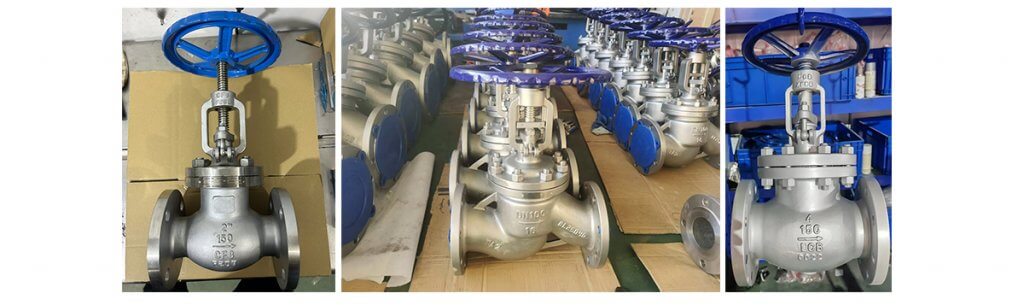
A globe valve with a stainless steel body. The disc moves perpendicular to the seat, providing precise throttling control. Used for flow regulation rather than simple isolation in chemical processes.
Excellent throttling capability – Linear flow characteristic for precise flow control.
Corrosion resistant – SS316/CF8M body withstands moderate chemical attack.
Good shut-off – Metal-to-metal or PTFE seat options.
Repairable in-line – Seat and disc can be serviced without removing the valve body.
Role in Chemical Industry
* Chemical dosing and injection control
* Pump recirculation lines
* Steam and condensate regulation
* Cooling water control
Why Irreplaceable
Gate valves are for isolation only — they do not throttle well. Ball valves are for on/off and limited regulation. The globe valve is specifically designed for throttling — its flow characteristic allows precise control of chemical feed rates, making it indispensable in dosing and regulation applications.
Triple-Eccentric Stainless Steel Butterfly Valve
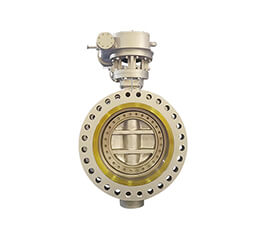
A butterfly valve with triple offset geometry (three eccentricities) and a metal seat. The disc follows a camming action — it lifts off the seat before rotation, eliminating wear. Available with stainless steel body (SS304, SS316, SS316L) for corrosion resistance .
Zero seat wear – Camming action lifts the seal off the seat before rotation .
Metal-to-metal sealing – Suitable for high temperature (up to 600°C) and abrasive service .
Bidirectional zero leakage – Maintains ISO 5208 Class VI sealing .
Fire-safe – All-metal construction with no elastomers to burn .
High pressure and large diameter – Handles high pressures (up to Class 600) and large diameters .
Role in Chemical Industry
* High-temperature chemical reactor isolation
* Corrosive and abrasive service (where fluorine linings cannot withstand temperature)
* High-pressure chemical lines
* Catalyst and abrasive slurry lines
Why Irreplaceable
When chemical service requires both corrosion resistance AND high temperature capability (above 180°C), fluorine-lined valves cannot be used. Standard butterfly valves with soft seats fail. The triple-eccentric stainless steel butterfly valve provides metal-seat durability, high temperature resistance, and bidirectional shut-off . It fills the gap between lined valves and expensive alloy valves.
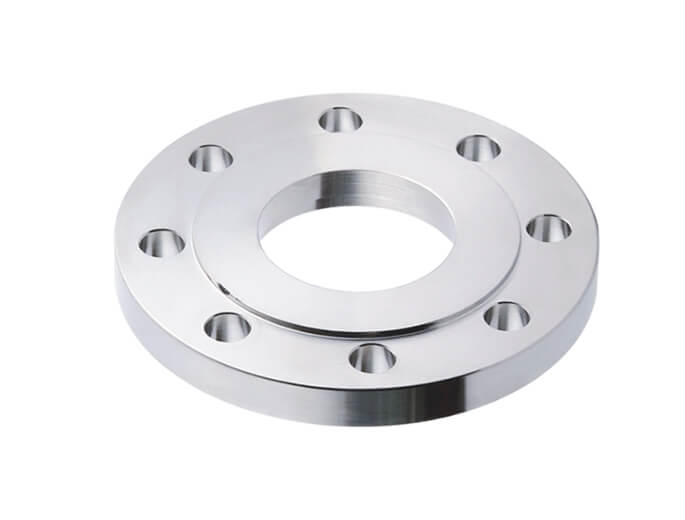
SS Flanges (Stainless Steel)
Flanges connect pipes, valves, and equipment. Stainless steel flanges (SS304, SS316/316L) provide corrosion resistance in aggressive chemical environments — acid lines, caustic transfer, and solvent systems.
Corrosion resistant – SS316L withstands acidic, caustic, and chloride attack.
High strength – Suitable for high-pressure chemical circuits.
Standard drilling – Compatible with ANSI, DIN, GB, JIS, and HG standards.
Weld or threaded – Flexible joining methods.
Traceability – Material certification available for critical service.
Role in Chemical Industry
* Connecting lined valves and equipment in acid lines
* Flanged joints in high-pressure chemical piping
* Corrosive transfer line connections
* Reactor and tank farm piping
Why Irreplaceable
Carbon steel flanges corrode in chemical service, leading to gasket failure and leaks. The SS flange provides both strength and corrosion resistance . For acid and caustic lines, it is the standard choice — no alternative material matches this balance of strength and corrosion resistance.
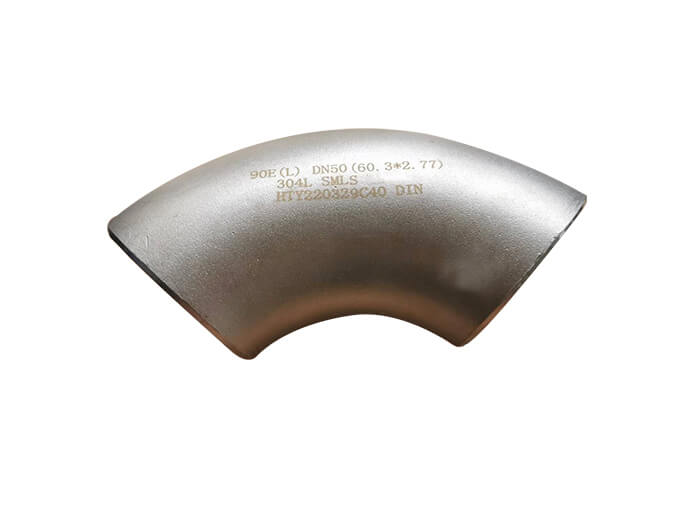
SS Elbow (Stainless Steel)
A 45° or 90° pipe elbow made of stainless steel (SS304, SS316L). Used to change direction of flow in corrosive chemical piping.
Corrosion resistant – For acidic, caustic, and solvent service.
Smooth interior – Reduced turbulence compared to carbon steel with lining.
Long radius options – Gentler change for abrasive or viscous media.
Weldable – Easily integrated into stainless piping systems.
Standard dimensions – ASME B16.9, GB/T 12459.
Role in Chemical Industry
* Direction changes in acid and caustic transfer lines
* Corrosive chemical feed and discharge lines
* Pump discharge piping with corrosion risk
* High-purity chemical lines
Why Irreplaceable
An all-stainless piping system requires stainless elbows at every directional change. Carbon steel elbows corrode in chemical service; plastic elbows lack mechanical strength. SS elbows bridge the gap with corrosion resistance and full pressure rating — they are essential for any corrosive chemical piping system.
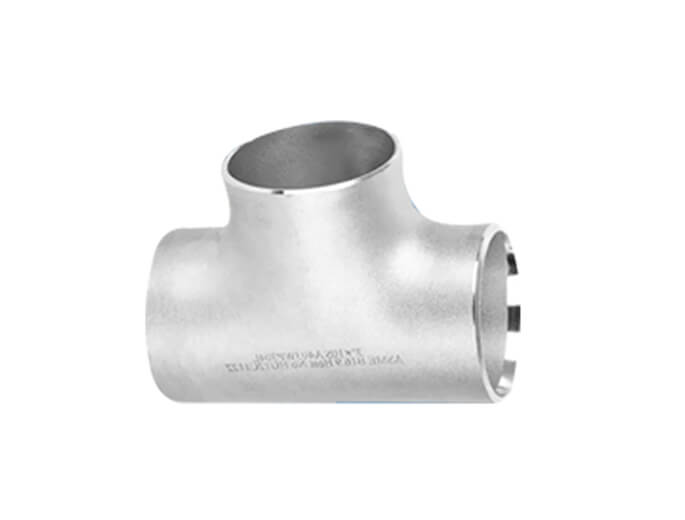
SS Tee (Stainless Steel)
A three-way fitting — straight tee or reducing tee — made of stainless steel. Used to branch or combine flow in chemical piping systems.
Corrosion resistant – Same SS304/316L protection.
Branch flow – Enables distribution to multiple chemical process points.
Reducing options – One size to two smaller sizes.
Stronger than lined carbon steel – No lining delamination risk.
Weldable – Reliable, leak-free connections.
Role in Chemical Industry
* Distributing acid or caustic solution to multiple reactors
* Combining chemical streams from parallel equipment
* Reagent feed branching to multiple process points
* Sampling system connections
Why Irreplaceable
To create a branch in a chemical line, you need either a tee or a welded saddle. SS tees provide strong, leak-free branches without introducing corrosion points. In acid or caustic service, carbon steel tees fail at the branch weld due to preferential corrosion — SS tees eliminate this failure mode.
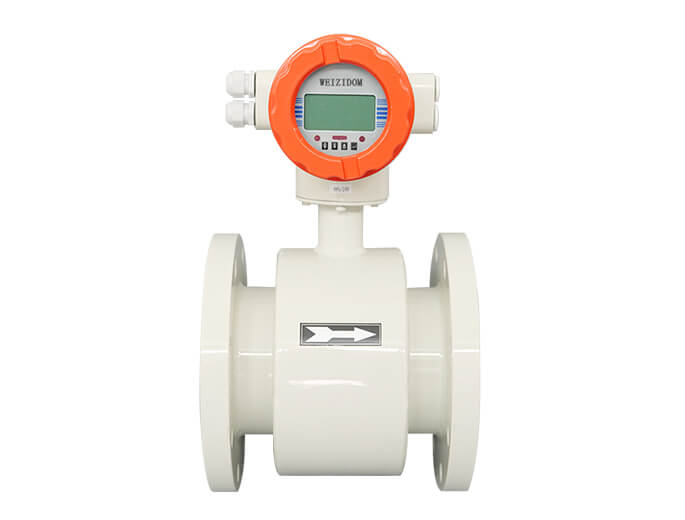
Electromagnetic Flow Meter
A flow meter that measures flow rate using Faraday's law of electromagnetic induction. Requires a conductive fluid (most chemical solutions and acids meet this). No moving parts — ideal for corrosive chemical applications.
No pressure drop – Full bore design with no obstruction.
No moving parts – No wear, no maintenance — ideal for corrosive media.
Highly accurate – ±0.5% of reading or better.
PTFE or PFA lining – Corrosion-resistant liner protects electronics.
Analog output (4-20mA) – Connects directly to DCS or plant control system.
Role in Chemical Industry
Acid flow measurement for process control
Caustic transfer monitoring
Chemical dosing flow verification
Plant-wide chemical balance and reporting
Why Irreplaceable
To measure corrosive chemical flow accurately, you cannot use mechanical flow meters (they corrode) or orifice plates (they create pressure drop and erosion). The electromagnetic flow meter has no moving parts, no obstruction, and a corrosion-resistant lining . For chemical plants requiring accurate, maintenance-free flow measurement, it is the standard choice.
Summary Table: Each Product's Role in Chemical Industry (Fast Reference for Project Engineers)
| Product | Primary Role in Chemical Industry | Typical Application |
| Fluorine-Lined Butterfly Valve | Isolation & regulation of corrosive media | Strong acids (H₂SO₄, HCl), alkalis, solvents — large diameter |
| Fluorine-Lined Ball Valve | Zero-leakage isolation in corrosive service | Acid and caustic lines, solvent systems — tight shut-off |
| Fluorine-Lined Diaphragm Valve | Zero-emission isolation for hazardous media | Strong acids, high-purity chemicals, hazardous service |
| Stainless Steel Gate Valve | Isolation in high-temp / moderate corrosive service | High-temp chemical lines, steam, utility systems |
| Stainless Steel Ball Valve | On/off control in moderately corrosive service | Chemical feed, utility lines, instrument isolation |
| Stainless Steel Globe Valve | Precise flow throttling and regulation | Chemical dosing, pump recirculation, flow control |
| Triple-Eccentric Stainless Steel Butterfly Valve | High-temp / high-pressure corrosive service | Reactor isolation, abrasive chemical lines >180°C |
| SS Flanges | Corrosion-resistant pipe connections | Acid lines, caustic lines, high-pressure circuits |
| SS Elbow | Direction change in corrosive piping | Acid/solvent transfer, pump discharge lines |
| SS Tee | Branching flow in corrosive service | Acid distribution, reagent feed branching |
| Electromagnetic Flow Meter | Accurate flow measurement in corrosive media | Acid flow monitoring, chemical balance, DCS integration |
Contact WEIZIDOM for Chemical Project Support
Selecting the wrong valve, fitting, or meter for a chemical application can lead to dangerous leaks, environmental releases, and costly downtime. WEIZIDOM Group has supplied chemical industry products for over 25 years, with fluorine-lined and stainless steel solutions meeting GB, ANSI, DIN, BS, and JIS standards.