Case
Home / Case / Experience / Main Function in Oil and Gas Systems: API Ball Valve
Case

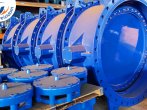
An API Ball Valve is a quarter-turn, high-performance industrial valve that uses a spherical ball with a cylindrical bore to control the flow of fluids in pipelines. Designed and manufactured in accordance with American Petroleum Institute (API) standards — primarily API 6D for pipeline valves — these valves are engineered to withstand the demanding conditions of oil, gas, and petrochemical applications.
Design Standard: GB/T12237 API 6D
Diameter Range: DN15-DN1400
Pressure Range: 150LB-2500LB
Medium: Natural gas, liquefied petroleum gas, oil, etc.
Material: A105, LF2, F304, F316, F51, WCB, LCB, CF8, CF8M, etc.
Application Fields: Petroleum, chemical, hydropower, gas and liquid pipeline transportation, etc.
* A hollow ball with a bore (typically full bore or reduced bore) is positioned between two sealing seats
* When the valve is open, the ball is rotated so the bore is aligned with the pipeline axis — allowing fluid to flow straight through with minimal pressure drop
* When the valve is closed, the ball is rotated 90 degrees so the solid surface of the ball blocks the flow path
* A stem connects the ball to an operator (handle, gear, or actuator) for rotation
* Seats (typically PTFE, Nylon, or metal) provide bubble-tight sealing around the ball
* API 6D Compliance – The definitive standard for pipeline valves used in petroleum and natural gas industries, covering design, materials, dimensions, testing, and marking
* Quarter-turn operation – 90-degree rotation from fully open to fully closed — fast, simple operation
* Bubble-tight shut-off – Resilient or metal seats provide zero leakage when closed
* Full bore or reduced bore options – Full bore for pigging and minimal pressure drop; reduced bore for lower cost and smaller envelope
* Fire-safe design available – Secondary metal seats maintain shut-off if primary soft seats are damaged in a fire
* Trunnion or floating ball design – Floating ball for smaller diameters/lower pressures; trunnion-mounted ball for large diameters/high pressures
At WEIZIDOM, our API Ball Valves are manufactured to GB/T12237 and API 6D design standards with strict quality control, ensuring reliable, leak-tight performance for natural gas, liquefied petroleum gas, oil, and other demanding pipeline applications.
In oil and gas systems, the API Ball Valve serves as a fast-acting, reliable isolation device for pipelines and processing facilities.
| Function | Description |
| Pipeline Shut-Off (On/Off Service) | Provides reliable, bubble-tight isolation of natural gas, LPG, oil, and other hydrocarbon pipelines — quarter-turn operation enables rapid closure in emergency situations. |
| Emergency Shutdown (ESD) | Quick 90-degree operation allows immediate shut-off of flow during emergency conditions — critical for safety systems in gas and liquid pipelines. |
| Sectionalizing Transmission Pipelines | Divides long-distance oil and gas pipelines into manageable segments — allows maintenance, repair, or isolation without draining entire lines. |
| Compressor and Pump Station Isolation | Installed on suction and discharge lines at compressor stations and pump stations — enables equipment isolation for maintenance or bypass operation. |
| Wellhead and Manifold Flow Control | Used in wellhead trees and manifold systems to direct or isolate flow from multiple wells — provides positive shut-off for well workover operations. |
| Loading and Unloading Systems | Installed on truck loading racks, railcar loading systems, and marine loading arms — provides reliable shut-off during product transfer operations. |
Typical applications within petroleum, chemical, hydropower, gas and liquid pipeline transportation include:
| Application Field | Specific Use |
| Natural Gas Pipelines | Transmission line block valves, city gate stations, compressor station bypass |
| Liquefied Petroleum Gas (LPG) Systems | Storage tank isolation, loading systems, vapor return lines |
| Crude Oil & Refined Product Pipelines | Pump station isolation, mainline block valves, tank farm piping |
| Petrochemical Plants | Reactor feed, product transfer, utility isolation |
| Chemical Processing | Corrosive and hazardous fluid handling |
| Hydropower & Industrial Water Systems | High-pressure penstock isolation, cooling water systems |
WEIZIDOM’s API Ball Valve is engineered specifically for oil, gas, and demanding pipeline applications, providing rapid, reliable isolation under high pressure and challenging conditions.
| Feature | Advantage |
| API 6D & GB/T12237 Compliance | Manufactured to recognized petroleum industry and Chinese national standards — ensures design integrity, dimensional interchangeability, rigorous testing, and global acceptance for pipeline and process applications. |
| Exceptional Diameter & Pressure Range (DN15–DN1400, Class 150–2500) | Covers everything from small instrument isolation (DN15) to major pipeline block valves (DN1400) and from medium-pressure (Class 150) to ultra-high-pressure (Class 2500) applications — a single valve family for projects across the entire oil and gas industry. |
| Quarter-Turn Operation – Fast Shut-Off | 90-degree rotation from fully open to fully closed enables rapid response in emergency situations — critical for pipeline safety and emergency shutdown (ESD) systems. |
| Bubble-Tight Shut-Off | Precision-machined ball and resilient seats (PTFE, Nylon, PEEK) provide zero leakage when closed — meets API 598 seat test requirements for positive isolation of hazardous fluids. |
| Full Bore or Reduced Bore Options | Full bore (full port) provides unobstructed flow path for pigging and minimal pressure drop; reduced bore (regular port) offers lower cost and smaller envelope — select based on application requirements. |
| Trunnion or Floating Ball Design | Floating ball design (DN15–DN200) — ball floats against downstream seat for positive sealing under pressure. Trunnion-mounted ball (DN200–DN1400) — top and bottom stem supports absorb line pressure, reducing operating torque in large diameters. |
| Parameter | Options | Typical Application |
| Bore Size | Full Bore (Full Port) | Piggable pipelines, minimal pressure drop, high flow efficiency |
| Reduced Bore (Regular Port) | General isolation where pigging is not required, lower cost | |
| Ball Support | Floating Ball | DN15–DN200, lower pressures, cost-effective |
| Trunnion-Mounted Ball | DN200–DN1400, high pressures, large diameters, lower torque | |
| Seat Material | PTFE / RTFE | General oil, gas, water, chemical — excellent low-friction sealing |
| Nylon | Higher temperature capability, wear resistance | |
| PEEK | High temperature, high pressure, demanding chemical service | |
| Metal (Hardfaced) | High temperature, abrasive media, fire-safe applications | |
| End Connections | Flanged (ASME B16.5) | Standard pipeline and process connections |
| Butt Weld (ASME B16.25) | Permanent pipeline installations, reduced leakage paths | |
| Socket Weld / Threaded | Small diameter, high pressure, instrument connections |
| Material Grade | Best For | Key Characteristics |
| WCB / A105 | General oil, gas, water, steam — moderate temperatures | Standard carbon steel — most common, cost-effective, good strength |
| LCB / LF2 | Low-temperature service (down to -46°C) | Low-temperature carbon steel — impact-tested for cold environments |
| CF8 (F304) / F304 | General corrosive service, oxidizing acids | 18Cr-8Ni stainless steel — good corrosion resistance |
| CF8M (F316) / F316 | Aggressive corrosive service, chloride environments | 18Cr-10Ni-2Mo — molybdenum improves chloride/pitting resistance |
| F51 (Duplex) | High-chloride, seawater, sour gas service | Duplex stainless steel — excellent chloride stress corrosion resistance, high strength |
| API 6D | Full pipeline valve specification | Complete material, design, testing, and marking requirements for pipeline service |
WEIZIDOM engineers can assist with material selection based on your specific media, temperature, pressure, and environmental conditions.