Case
Home / Case / Experience / Mining Slurry Pipeline Valve Selection |Wear-Resistant Types & Applications
Case

Mining operations rely heavily on slurry pipelines to transport ore, tailings, and wastewater—media that are highly abrasive, corrosive, and contain high concentrations of solid particles (sand, gravel, ore fragments). These harsh conditions place extreme demands on valves, requiring them to be wear-resistant, corrosion-resistant, and clog-resistant to ensure uninterrupted operation. The wrong valve selection can lead to frequent failures, unplanned downtime, and high maintenance costs—significantly impacting mining productivity.
As a leading valve manufacturer specializing in mining solutions, we provide wear-resistant, high-performance valves certified to ISO, CE, and API standards. This guide outlines the key challenges of mining slurry applications, the most suitable valve types, material selection criteria, and best practices for valve selection to help mining engineers and procurement teams choose the right valves for their slurry pipelines.

Mining slurry media present unique challenges that differentiate them from other industrial applications.
Understanding these challenges is critical to selecting the right valve:
High Abrasion: Slurry contains hard solid particles (e.g., quartz, ore fragments) that continuously scour valve internals (seats, discs, flow paths), leading to premature wear and leakage.
High Viscosity & Density: Slurry is often thick and dense, requiring valves with large, unobstructed flow paths to prevent clogging and ensure smooth flow.
Corrosion: Many mining slurries (e.g., acid mine drainage, chemical leaching slurries) are corrosive, requiring valves made of corrosion-resistant materials to avoid material degradation.
Pressure & Temperature Fluctuations: Mining slurry pipelines often operate at high pressures (PN40-PN100) and varying temperatures, requiring valves that can withstand these fluctuations without failure.
Clogging Risk: Solid particles can settle in valve internals, leading to clogging and valve failure—especially in valves with complex structures or narrow flow paths.
The ideal valve for mining slurry pipelines must have a simple structure, unobstructed flow path, wear-resistant components, and corrosion resistance. Below are the most suitable valve types, ranked by their performance in slurry applications.
Eccentric hemispherical valves are the top choice for mining slurry pipelines, especially for high-abrasion, high-solids-content slurries (e.g., tailings, ore slurry with solids content >30%). Their unique design addresses the key challenges of slurry applications.
Key Features:
Unobstructed Flow Path: When fully open, the eccentric hemisphere-shaped disc is completely separated from the flow path, creating a full-bore, straight-through flow path with no steps or narrow sections—preventing solid particle settlement and clogging.
Wear-Resistant Design: The disc and seat are made of wear-resistant materials (e.g., hard alloy, ceramic), and the eccentric rotation of the disc scrapes off any slurry adhering to the seat, reducing wear and preventing clogging.
Excellent Sealing: The line-contact seal between the disc and seat ensures bubble-tight shut-off, even after prolonged use in abrasive conditions. The seal is not easily damaged by solid particles, as the disc rotates away from the seat during opening.
High Pressure Resistance: Suitable for high-pressure slurry pipelines (PN40-PN100), with sizes ranging from DN50 to DN600.
Application Scenarios:
* Mine tailings pipelines (high solids content, high abrasion).
* Ore slurry transportation (hard ore particles, high viscosity).
* Chemical leaching slurry pipelines (corrosive and abrasive media).
* Coal washing slurry pipelines (high solids content, moderate corrosion).
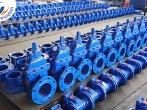
Knife gate valves (also known as elastic seated gate valves) are a cost-effective alternative for medium-abrasion, medium-solids-content slurries (e.g., municipal wastewater sludge, coal slurry with solids content 10-30%). They feature a thin, knife-like gate that cuts through viscous slurry, preventing clogging.
Key Features:
Thin Gate Design: The thin, sharp gate cuts through viscous slurry, reducing resistance and preventing solid particles from getting stuck between the gate and seat.
Elastic Sealing: The gate is wrapped in an elastic rubber seal (EPDM, NBR, or polyurethane), which compresses to form a tight seal and compensates for minor wear, ensuring reliable shut-off.
Clog-Resistant: The valve cavity has no dead corners, and the gate’s up-and-down movement scrapes off slurry adhering to the valve internals, reducing clogging risk.
Cost-Effective: More affordable than eccentric hemispherical valves, making them suitable for large-scale mining projects with budget constraints.
Application Scenarios:
Mine wastewater treatment pipelines (sludge with moderate solids content).
Coal slurry pipelines (medium abrasion, low to moderate solids content).
Construction and mining dewatering pipelines (slurry with small solid particles).
Limitations: Not suitable for high-abrasion, high-solids-content slurries (e.g., tailings with large ore fragments), as the elastic seal can be easily scratched and damaged by sharp particles.

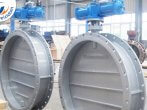
Eccentric butterfly valves are suitable for low to medium-abrasion, low-solids-content slurries (e.g., mining process water, low-concentration ore slurry with solids content <10%). They are compact, lightweight, and quick to operate, making them ideal for large-diameter pipelines.
Key Features:
Compact Design: Requires less installation space than gate valves or eccentric hemispherical valves, making them suitable for large-diameter pipelines (DN100-DN2000).
Quick Operation: Quarter-turn operation allows for fast opening and closing, critical for emergency situations.
Eccentric Design: The disc is offset from the valve center, reducing contact between the disc and seat during operation—minimizing wear and preventing clogging.
Wear-Resistant Options: Metal-seated eccentric butterfly valves with hardfaced discs and seats can handle moderate abrasion.
Application Scenarios:
Mining process water pipelines (low solids content, low abrasion).
Low-concentration ore slurry pipelines (solids content <10%).
Mine cooling water pipelines (no solids, low corrosion).
Limitations: Not suitable for high-solids-content or high-abrasion slurries, as the disc and seat are prone to wear and clogging.

Check valves are essential in mining slurry pipelines to prevent backflow, which can damage pumps, pipelines, and equipment. The ideal check valve for slurry applications must be clog-resistant and wear-resistant.
Recommended Types:
Swing Check Valves: Suitable for large-diameter slurry pipelines, with a simple, unobstructed flow path that resists clogging. The swing disc is made of wear-resistant materials, and the large flow path allows solid particles to pass through.
Dual Plate Check Valves: Compact, lightweight, and fast-closing, suitable for medium-diameter slurry pipelines. The dual plates are spring-loaded, ensuring quick closure to prevent backflow and water hammer.

Material selection is critical for mining slurry valves, as it directly impacts wear resistance, corrosion resistance, and service life. The choice of materials depends on the slurry’s abrasiveness, corrosiveness, and temperature.
Ductile Iron: Cost-effective, durable, and suitable for medium-abrasion, low-corrosion slurries (e.g., coal slurry, mine wastewater). Ductile iron can be coated with epoxy or polyurethane to improve corrosion resistance.
Stainless Steel 304/316: Corrosion-resistant, suitable for corrosive slurries (e.g., acid mine drainage, chemical leaching slurries). Stainless steel 316 is more corrosion-resistant than 304, making it ideal for harsh chemical environments.
Alloy Steel: High wear resistance and high-temperature resistance, suitable for high-abrasion, high-pressure slurries (e.g., tailings, ore slurry). Alloy steel can be hardfaced with tungsten carbide or other wear-resistant materials to further improve durability.
Duplex Stainless Steel: Combines corrosion resistance and wear resistance, suitable for highly corrosive and abrasive slurries (e.g., seawater-based mining slurries).
The disc and seat are the most wear-prone components of slurry valves, so they must be made of highly wear-resistant materials:
Hard Alloy (Tungsten Carbide, WC-Co): Extremely wear-resistant, suitable for high-abrasion slurries (e.g., tailings, ore slurry). Hard alloy discs and seats can withstand continuous scouring by solid particles, extending valve service life.
Ceramic: High wear resistance and corrosion resistance, suitable for corrosive and abrasive slurries. Ceramic discs and seats are ideal for chemical leaching slurries and acid mine drainage.
Polyurethane: Elastic, wear-resistant, and suitable for medium-abrasion, low-corrosion slurries (e.g., mine wastewater sludge). Polyurethane seats provide good sealing and can compensate for minor wear.
PTFE: Corrosion-resistant and non-stick, suitable for corrosive slurries with low solids content. PTFE seats are not suitable for high-abrasion slurries, as they are prone to scratching.
When selecting valves for mining slurry pipelines, consider the following critical factors to ensure optimal performance and longevity:
Solids content: High solids content (>30%) requires eccentric hemispherical valves; medium solids content (10-30%) requires knife gate valves; low solids content (<10%) requires eccentric butterfly valves.
Particle size: Large particles (>2mm) require full-bore valves with unobstructed flow paths; small particles (<1mm) can use knife gate or butterfly valves.
Corrosiveness: Corrosive slurries require stainless steel or duplex stainless steel valves with corrosion-resistant seats.
Pressure: High-pressure pipelines (PN40-PN100) require eccentric hemispherical valves or alloy steel knife gate valves.
Temperature: High-temperature slurries (>80°C) require metal-seated valves with high-temperature-resistant materials.
Flow rate: Large flow rates require full-bore valves (eccentric hemispherical, gate valves) to minimize pressure drop.

Choose valves with simple structures that are easy to disassemble and maintain, especially in remote mining areas.
Select valves with replaceable discs and seats to reduce maintenance costs and downtime.
Consider valves with built-in flushing ports to clean accumulated slurry and prevent clogging.
Ensure valves meet ISO, CE, and API standards for quality and performance.
For mining projects in Central Asia, ensure compliance with GOST standards; for European projects, comply with DIN standards.
Proper installation and maintenance are critical to extending the service life of mining slurry valves:
Installation:
Install valves in a straight section of the pipeline, with sufficient upstream and downstream pipe length to ensure uniform flow and reduce turbulence.
Ensure the valve is installed in the correct flow direction (follow the arrow on the valve body).
Use proper gaskets and fasteners to ensure a tight seal, preventing slurry leakage.
Install a filter upstream of the valve to remove large particles (>5mm) that can damage the valve internals.
Maintenance:
Regularly inspect the valve for wear, leakage, and clogging—weekly for high-abrasion applications, monthly for medium-abrasion applications.
Lubricate the valve stem and actuator regularly to ensure smooth operation.
Replace worn discs, seats, and seals promptly to prevent further damage to the valve body.
Flush the valve regularly to remove accumulated slurry and sediment.
Selecting the right valve for mining slurry pipelines is critical to ensuring uninterrupted mining operations, reducing maintenance costs, and maximizing productivity. Eccentric hemispherical valves are the best choice for severe slurry conditions, while knife gate valves offer a cost-effective solution for medium conditions, and eccentric butterfly valves are suitable for low to medium conditions.
Material selection is equally important—choosing wear-resistant and corrosion-resistant materials ensures the valve can withstand the harsh mining environment. By following the selection criteria and best practices outlined in this guide, you can choose valves that meet the specific needs of your mining project.
Our wear-resistant, high-performance valves are engineered specifically for mining slurry applications, with ISO, CE, and API certifications. We offer customized solutions to meet the unique challenges of your mining operation, from tailings pipelines to chemical leaching systems.
For technical specifications, pricing, or custom valve solutions for your mining slurry pipeline, contact Eileen via WhatsApp:
Tags: mining slurry valve, eccentric hemispherical valve, knife gate valve, wear-resistant valve, slurry pipeline valve, mine tailings valve, ore slurry valve, mining valve manufacturer